
Adaptive Resilience Reserves (ARR): The Resilience Framework Across Mainland, Free Zone, and Economic-Zone Companies
In previous articles, we explored how the Adaptive Resilience Reserve (ARR) model transforms liquidity management into a predictive, forward-looking capability designed to enhance resilience. The framework demonstrated particular relevance for entities operating in strategic sectors where stability is indispensable.
This article extends the ARR framework into a broader operating environment, companies across mainland jurisdictions, free zones, and specialized economic zones, each functioning under different regulatory structures but exposed to the same economic pressures and volatility cycles.
Despite structural differences, these companies share a common reality: they operate in highly interconnected economic ecosystems where liquidity stress in one segment, such as supply chain disruptions, quickly transmits across others, affecting areas like production and sales. Their resilience, therefore, must be engineered through a unified strategic approach that safeguards continuity during periods of contraction.
Why Mainland, Free Zone, and Economic-Zone Companies Require ARR
Across the UAE alone, more than 45 free zones and approximately 25–30 economic and industrial zones host hundreds of thousands of operating companies spanning manufacturing, logistics, finance, technology, and essential services. Across the wider GCC, this footprint expands to over 180 free and economic zones, forming one of the most interconnected commercial ecosystems globally.
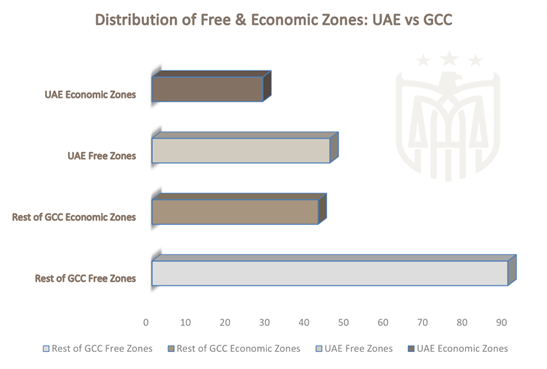
In such an environment, liquidity stress within a single zone or cluster does not remain isolated. Disruptions propagate rapidly across supply chains, labour markets, and capital flows, reinforcing the need for structured, forward-looking resilience mechanisms across all jurisdictions.
While each jurisdiction has its own regulatory framework, none are insulated from:
- Market volatility
- Demand contraction
- Supply chain instability
- Commodity price exposure
- Financing pressure
- Global demand sensitivity
- Operational cost escalation
Companies across these domains operate in sectors such as:
- Manufacturing and industrial production
- Logistics and trade
- Professional services and consulting
- Energy-linked value chains
- Technology, digital economy, and innovation hubs
- Infrastructure, utilities, and essential services
A disruption in any of these segments triggers ripple effects across the wider economy, making structured resilience not optional but essential.
Traditional reserve practices provide a financial cushion, but in a rapidly shifting operating environment characterized by unpredictable market fluctuations and sudden economic shocks, static reserves no longer suffice. ARR introduces a dynamic, indicator-driven architecture that recalibrates liquidity buffers in real time, ensuring companies can anticipate, absorb, and recover from economic shocks.
Applying the ARR Framework Across Jurisdictions
The ARR model maintains its core design: a structured mechanism that adjusts reserves according to shifts in revenue stability, cost dynamics, operational stress, and market conditions.
For Mainland Companies
These entities often face direct exposure to domestic consumption cycles, labour-intensive cost structures, supply chain dependencies, and credit conditions.
ARR enables:
- Stronger liquidity discipline
- Continuity of payroll and core operations
- Improved supplier stability
- Enhanced credit standing during downturns
For Free Zone Companies
Free zones are globally integrated business hubs, often exposed to international demand cycles, FX-linked risks, and cross-border receivable volatility.
ARR supports:
- Management of revenue cyclicality
- Protection against receivable ageing
- Continuity of commercial obligations (licensing, leases)
- Resilience in globally exposed operating models
For Economic-Zone and Industrial Clusters
These companies typically operate in asset-heavy, capital-intensive sectors where supply chain disruptions and commodity price volatility significantly impact operations.
ARR strengthens:
- Production continuity
- Inventory and procurement buffers
- Ability to weather commodity-driven shocks
- Long-cycle contract stability
Key Benefits Across All Jurisdictions
- Predictive Liquidity Discipline
ARR increases reserves during early signs of market pressure and strategically releases capital when stability returns, ensuring liquidity aligns with operational needs and strategic priorities, which avoids sentimental or short-term impulsive decision making.
- Reduced Reliance on Extraordinary Support
By developing internal resilience mechanisms, companies minimize the need for unplanned external financing or emergency measures during downturn cycles.
- Enhanced Visibility and Governance
ARR produces forward-facing liquidity and performance indicators that enhance board oversight by providing real-time data, improve management decision-making through predictive analytics, and bolster internal financial governance with transparent reporting.
- Ability to Reinforce Strategic Ambitions
Released reserve capital supports key growth-oriented initiatives such as:
- Digital transformation
- Modernisation and automation
- Efficiency improvements
- Workforce development
- Sustainability commitments
This ensures the reserve becomes a mechanism for progress, not simply a defensive buffer.
Technical Model Across Jurisdictions
The ARR framework is grounded in measurable indicators, including:
- Revenue fluctuation thresholds
- Supply chain risk and external logistics stress
- Receivable and payables behaviour
- Energy and commodity price sensitivity
- Sustainability compliance gaps
- Geopolitical and market-driven disruptions
When thresholds are breached, reserves automatically strengthen.
When indicators stabilise, ARR pivots to strategic reinvestment, adding agility and intelligence to liquidity governance.
This keeps the reserve active, adaptive, and aligned with real operating conditions across different jurisdictions.
Alignment With the UAE’s Long-Term Economic Direction
Across mainland, free zones, and economic zones, companies contribute to key national ambitions including competitiveness, sectoral diversification, industrial growth, sustainability transitions, and digital transformation.
ARR enhances these objectives by embedding:
- Financial discipline
- Operational continuity
- Data-driven governance
- Resilience-oriented decision-making
When companies across different jurisdictions operate with proactive resilience, the national economy benefits from stability, continuity, and strategic momentum during global volatility.
Conclusion
The Adaptive Resilience Reserve model provides a structured, forward-looking approach to liquidity management across mainland companies, free zone enterprises, and economic-zone operators. It evolves with changing market conditions and operational realities, enabling businesses to move beyond passive reserve policies toward active resilience.
This unified application of ARR fosters an environment where companies can withstand economic stress, maintain continuity, and accelerate their strategic agendas.
In a complex and interconnected operating landscape, applied resilience serves not only as a defensive strategy but also as a pathway to long-term competitiveness and sustained growth.
Copyright: Dr. Mohammed Hassan Al Raeesi Advocates & Legal Consultants retains all intellectual property rights to this content. No third party may use, copy, or modify any part of it without prior permission and without proper attribution to our firm.
Disclaimer: This is a conceptual framework intended for thought leadership and does not constitute legal or financial advice. For professional evaluation of your company’s financial and ESG governance policies, please contact our firm.
📍 1105, Tameem House, Al Barsha Heights, Dubai, UAE
📞 +971 4 298 0686
💬 WhatsApp: +971 56 111 3928
📩 info@dralraeesilegal.com
🌐 www.dralraeesilegal.com